
Boring And Spoil Removal
Augering
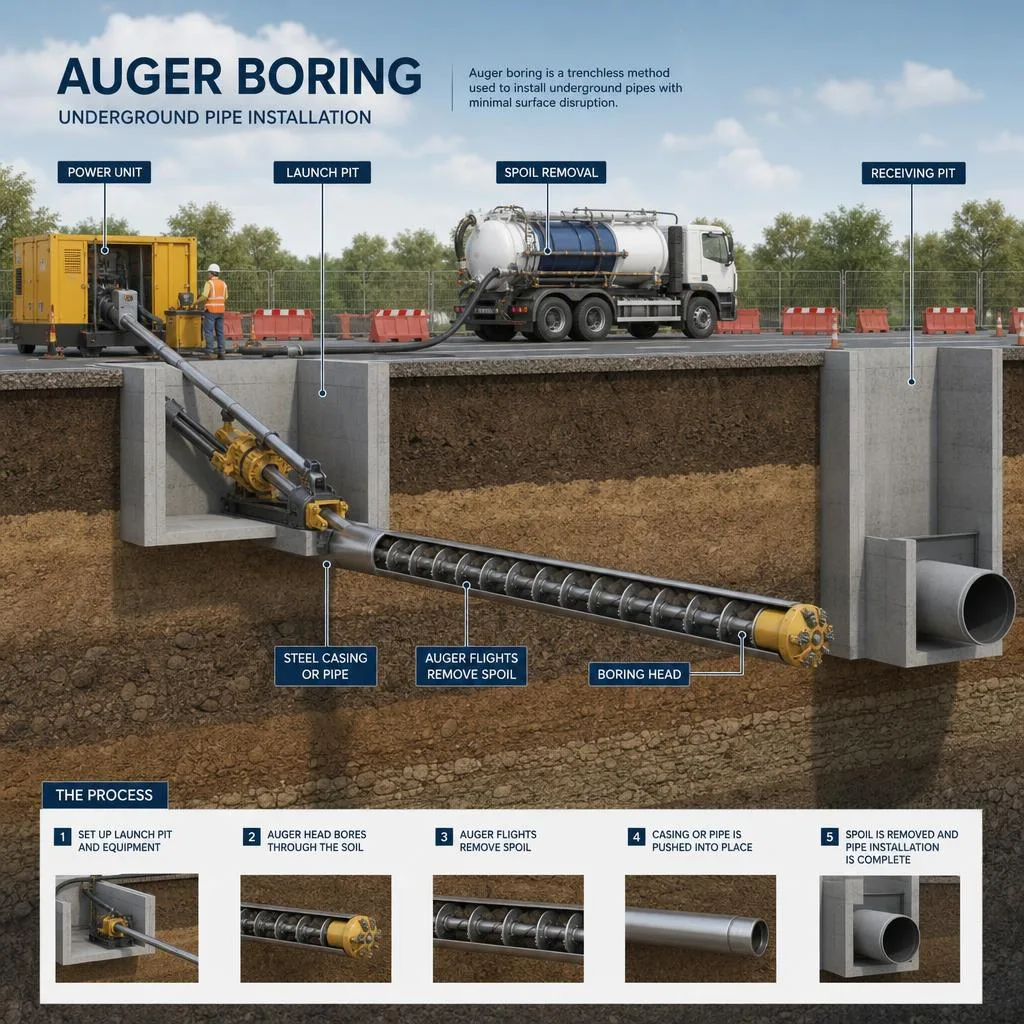
Augering uses rotating auger flights to bore through the ground, remove spoil and support the installation of pipe, duct or casing from an access point.
What Is Augering?
Augering is a practical trenchless boring method. As the bore advances, the auger removes spoil back to the working area while the pipe or casing is pushed or installed along the route.
It is different from Guided Augering because the focus is on the boring and spoil removal process rather than a guided pilot route with line and level control.
How It Works
A launch area is prepared and the auger equipment is aligned to the intended route. The rotating auger cuts the ground and carries spoil back through the casing or bore.
The method needs enough room for equipment, pipe handling and spoil management. Route information and ground conditions are important before the work is assessed.
When It Is Used
Augering is often used for straight or controlled bores where pipes, ducts or casings are needed below a surface feature.
It can be suitable for utility, drainage and service routes when open-cut excavation would create unnecessary disturbance.
Typical Applications
- Pipe and duct installation
- Road or yard crossings
- Casing installation
- Short to medium underground bores
Site Considerations
- Bore length and alignment
- Ground type and spoil handling
- Launch area size
- Receiving area access
- Pipe or casing size
Benefits
- Forms a bore while removing spoil
- Keeps excavation focused around access points
- Useful for pipe, duct and casing routes
- Can reduce reinstatement compared with full open trenching
Related Case Studies
Case Study
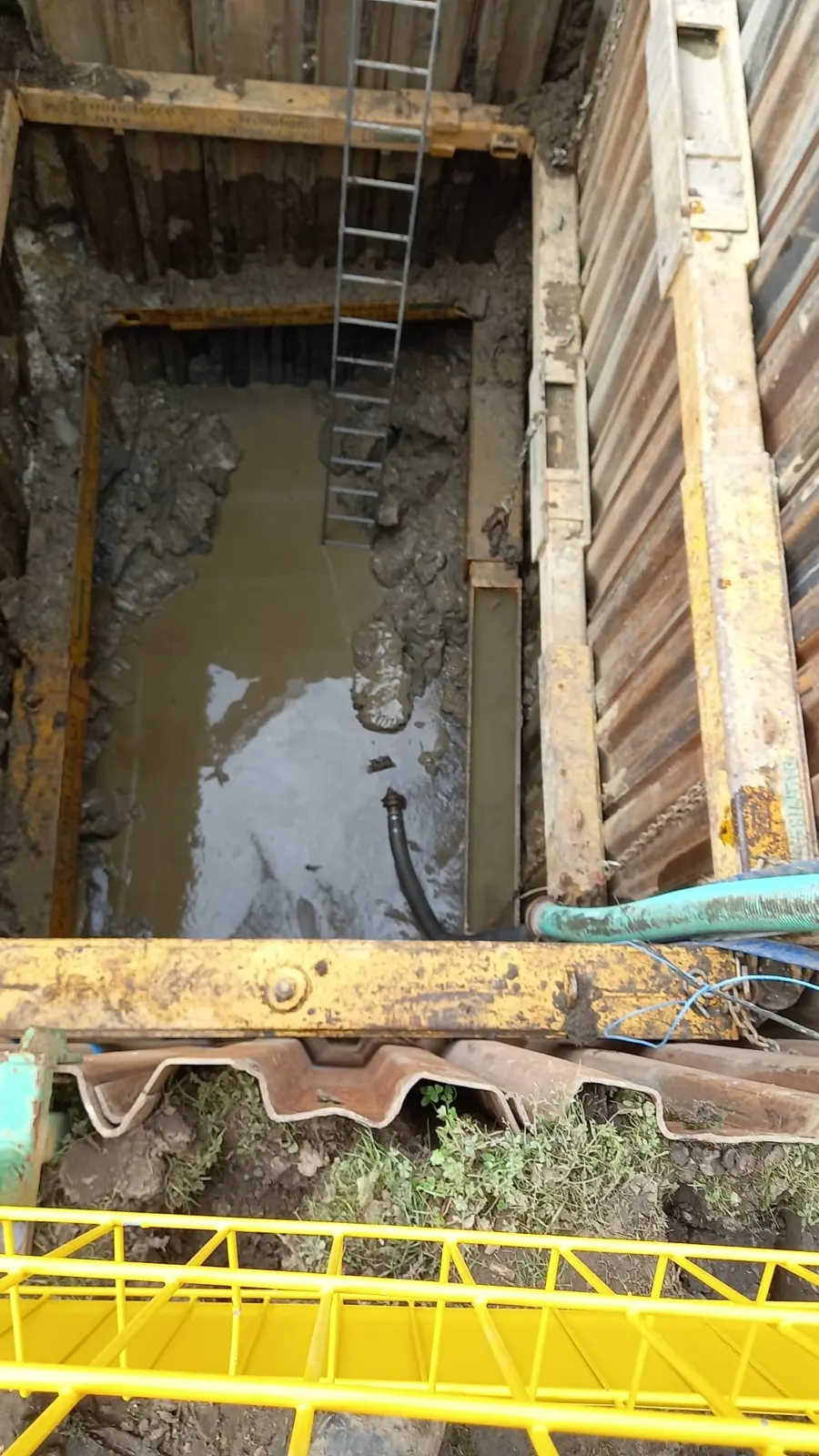
Stowmarket Augering
Augering works at Stowmarket from a prepared access pit.
Case Study
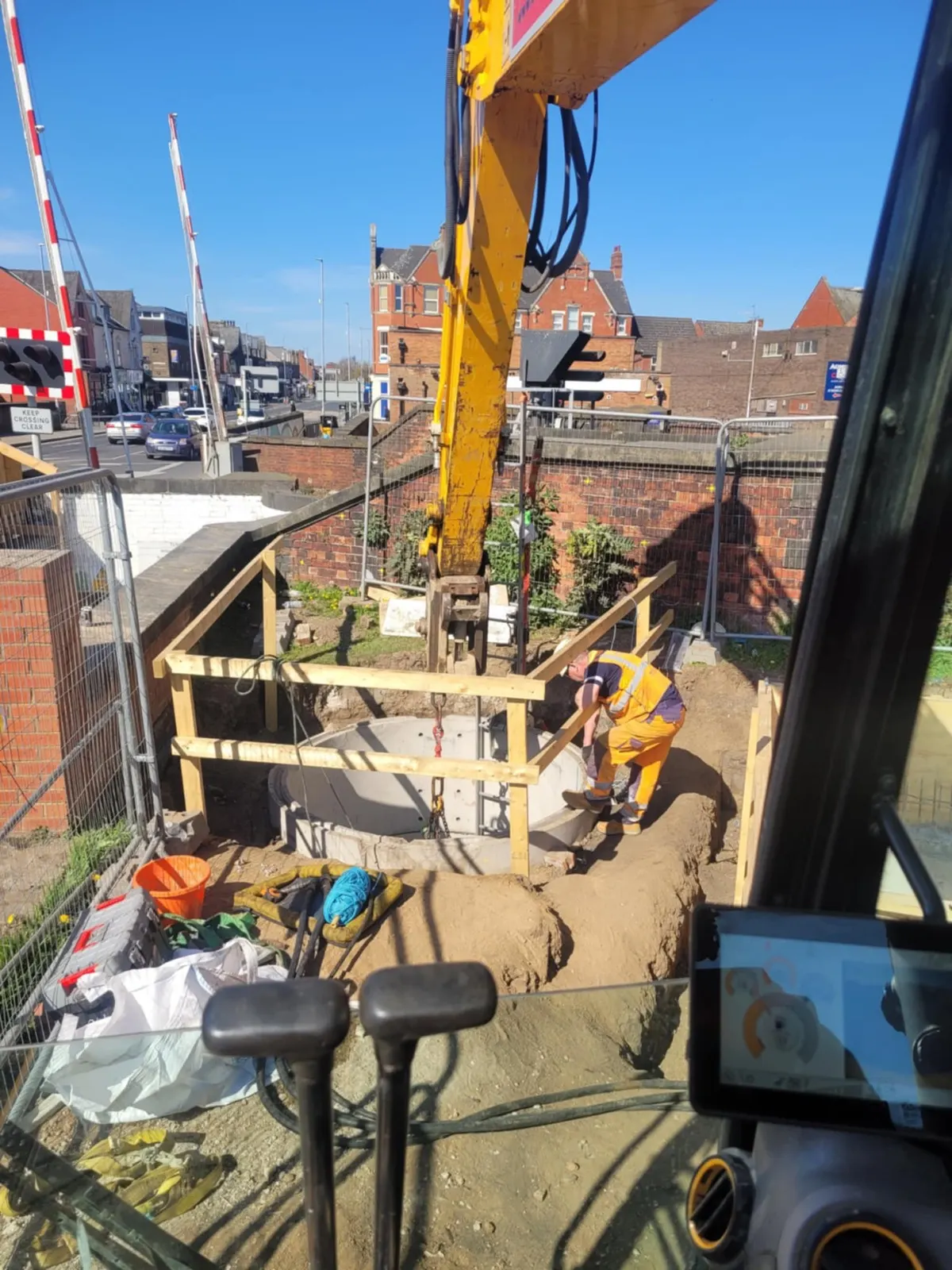
Guided Augering
Related augering works for controlled underground installation.
Case Study
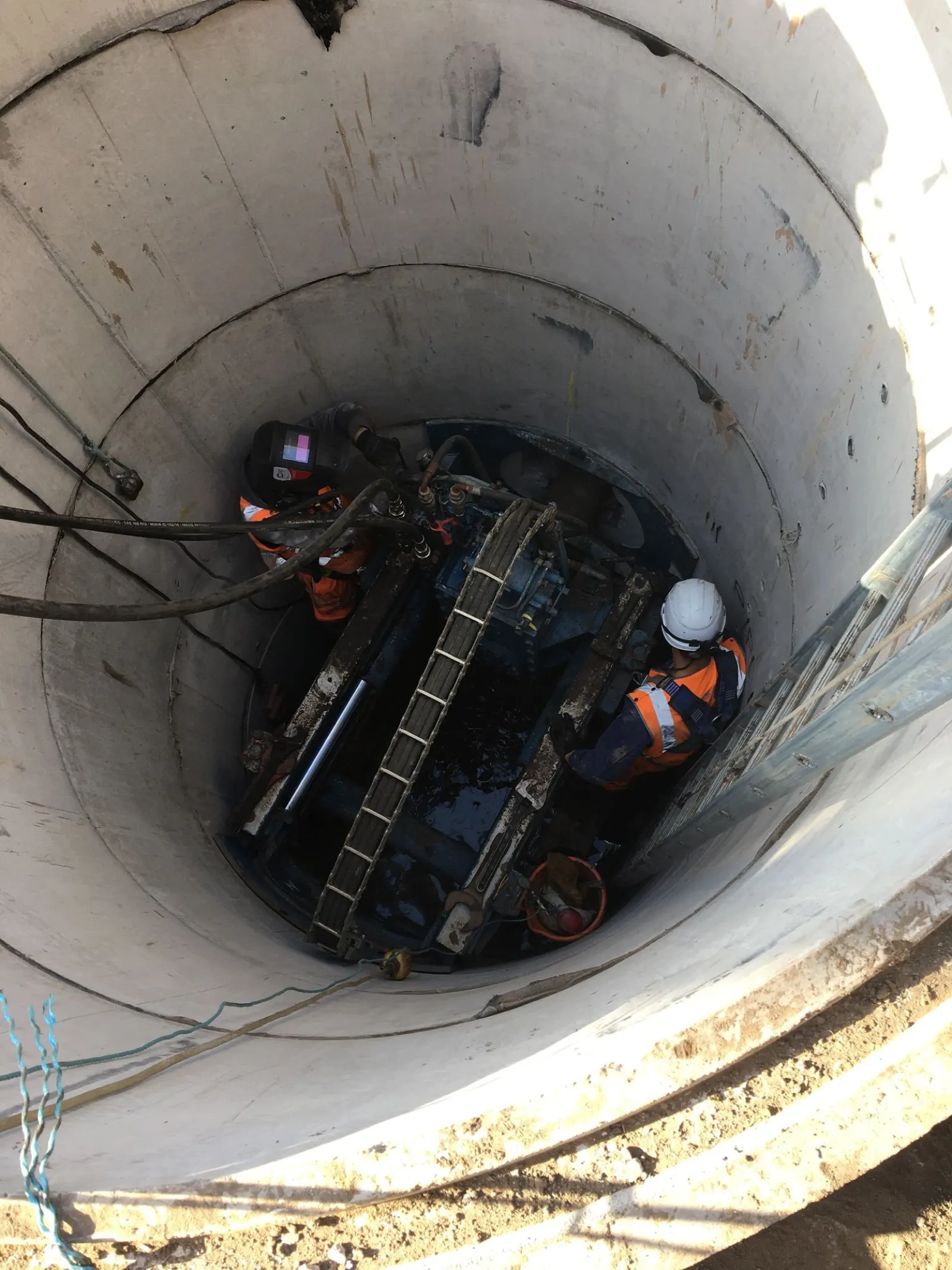
Goole Guided Auger
A related guided auger example with equipment and casing images.
What Information Should You Provide?
Useful enquiry information includes the project location, route length, pipe or duct size, depth, ground details if known, access points, drawings and site photos where available.
The more practical information you can share, the easier it is to identify whether Augering or another no-dig method may be suitable.
Planning Augering Works?
Send the project location, route length, pipe or duct size, depth, ground details, access points, drawings and site photos where available. No Dig Ltd can help identify whether this method is suitable.