
Steerable Underground Drilling
Horizontal Directional Drilling
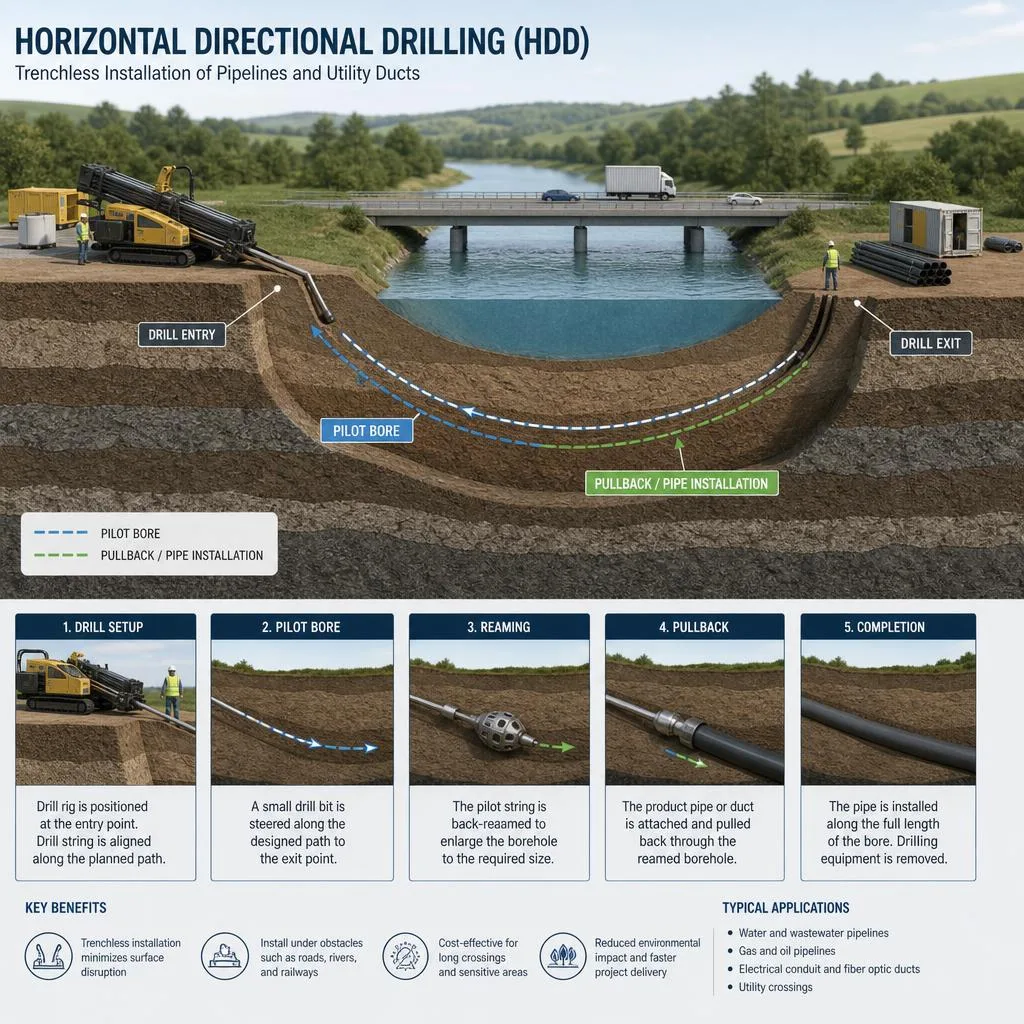
Horizontal Directional Drilling, or HDD, is a steerable method for installing pipes, ducts or cables along curved underground bore paths.
What Is Horizontal Directional Drilling?
HDD is a trenchless drilling method that starts with a steerable pilot bore. The route can pass below obstacles such as roads, rivers, hardstanding or landscaped areas.
After the pilot bore, the route is normally enlarged by reaming before the pipe or duct is pulled back into position.
How It Works
The drill rig creates a pilot bore along the planned route. The bore is then reamed to a suitable size and the final pipe or duct is pulled back through the prepared path.
The method depends on route design, launch and exit positions, ground information, drilling fluid management and enough space to handle pipe or duct strings.
When It Is Used
HDD is used where a steerable route is needed or where the bore path has to pass below an obstacle.
It is common for utilities, telecoms, water, drainage and duct installations where open excavation would cause disruption.
Typical Applications
- Utility and telecom ducts
- Road and watercourse crossings
- Longer curved bore paths
- Pipe and cable routes
Site Considerations
- Launch and exit positions
- Bore path radius
- Ground conditions
- Drilling fluid management
- Pipe string handling space
Benefits
- Steerable underground route
- Can pass below obstacles
- Reduces surface disruption
- Useful for ducts, pipes and cables
Related Case Studies
Case Study
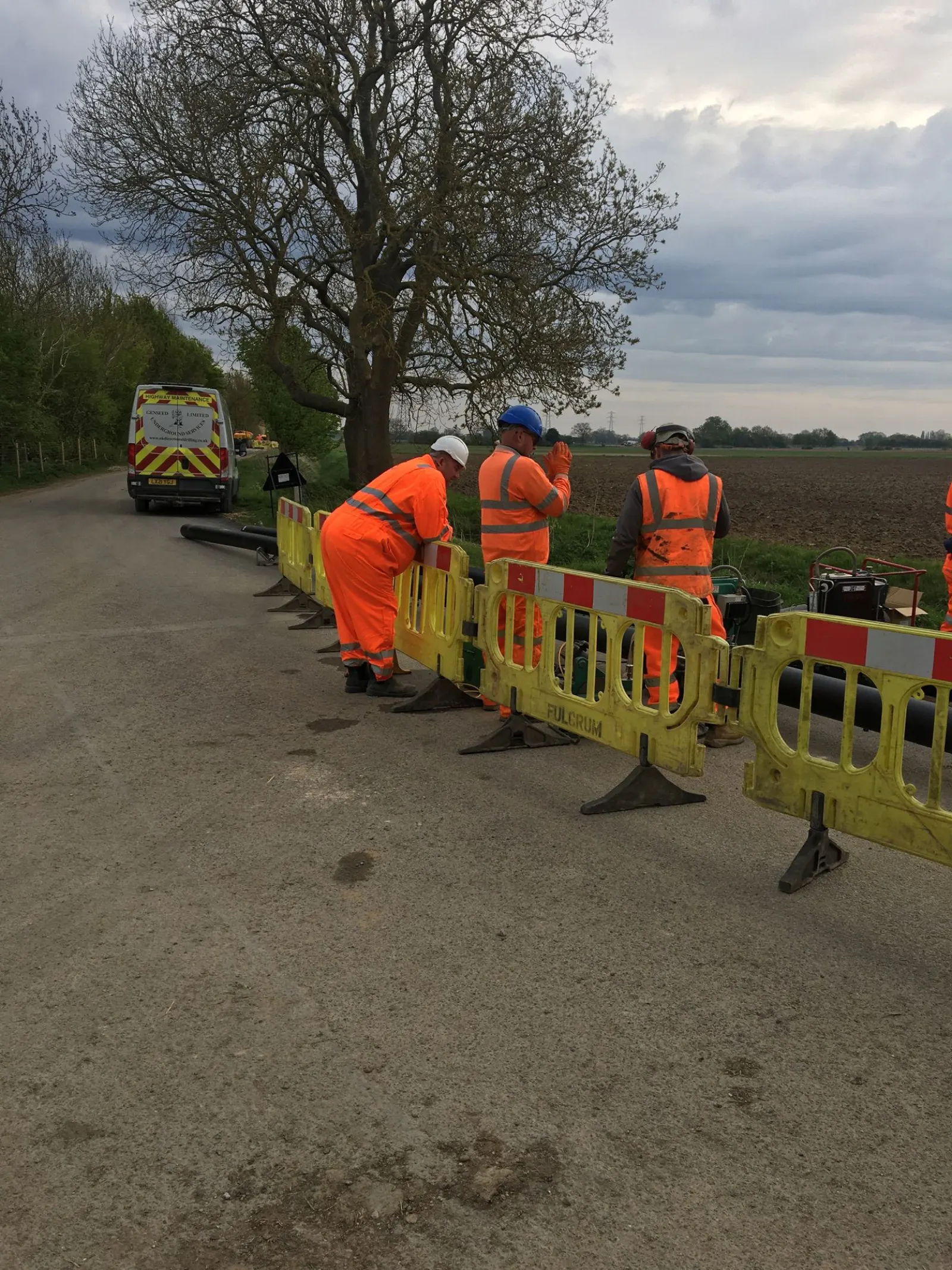
Boston HDD And Butt Fusion
HDD and Butt Fusion Welding works at Boston, Lincolnshire.
What Information Should You Provide?
Useful enquiry information includes the project location, route length, pipe or duct size, depth, ground details if known, access points, drawings and site photos where available.
The more practical information you can share, the easier it is to identify whether Horizontal Directional Drilling or another no-dig method may be suitable.
Planning Horizontal Directional Drilling Works?
Send the project location, route length, pipe or duct size, depth, ground details, access points, drawings and site photos where available. No Dig Ltd can help identify whether this method is suitable.