
Chamber And Structure Openings
Core Drilling
Core Drilling creates clean circular openings through chambers, walls and structures for pipes, ducts and service connections.
Core Drilling Advice
Suitability depends on the route, access, existing services, ground information and the details supplied at enquiry stage.
What Is Core Drilling?
Core Drilling is a controlled way to form a circular opening through a structure. It is often used in chambers, walls, slabs and other concrete or masonry elements.
The method gives a neater result than breaking out by hand and helps protect the surrounding structure.
How It Works
A core drill is positioned against the structure and cuts a circular opening to the required diameter. Water control, access and safe setup are considered before drilling starts.
The exact drill size depends on the pipe, duct or service opening needed. The surrounding structure and working space also matter.
When It Is Used
Core Drilling is used for service penetrations, chamber connections, wall openings and access works.
It is particularly useful where the opening needs to be tidy and localised.
Typical Applications
- Chamber wall openings
- Pipe and duct penetrations
- Service connections
- Concrete, brick or blockwork openings
Site Considerations
- Structure type and thickness
- Opening diameter
- Access and working space
- Water and slurry control
- Existing services and reinforcement
Benefits
- Clean circular openings
- Less damage to surrounding structure
- Useful in confined areas
- Good for service connection works
Related Case Studies
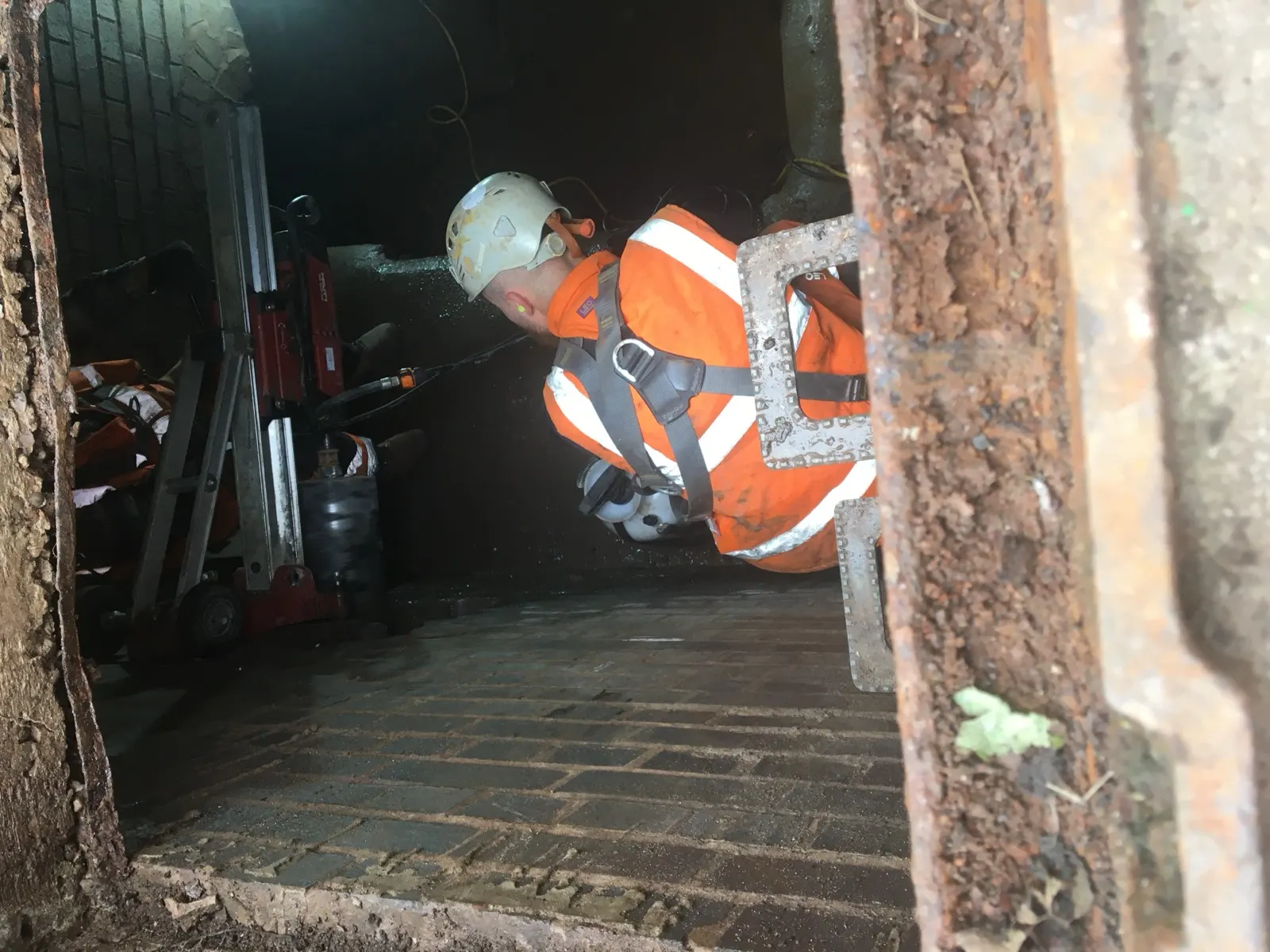
Case Study
Alderton Core Drilling
Core drilling through a brick-built underground chamber wall.
What Information Should You Provide?
Useful enquiry information includes the project location, route length, pipe or duct size, depth, ground details if known, access points, drawings and site photos where available.
The more practical information you can share, the easier it is to identify whether Core Drilling or another no-dig method may be suitable.
Planning Core Drilling Works?
Send the project location, route length, pipe or duct size, depth, ground details, access points, drawings and site photos where available. No Dig Ltd can help identify whether this method is suitable.