
Trenchless Pipe Replacement
Pipe Bursting
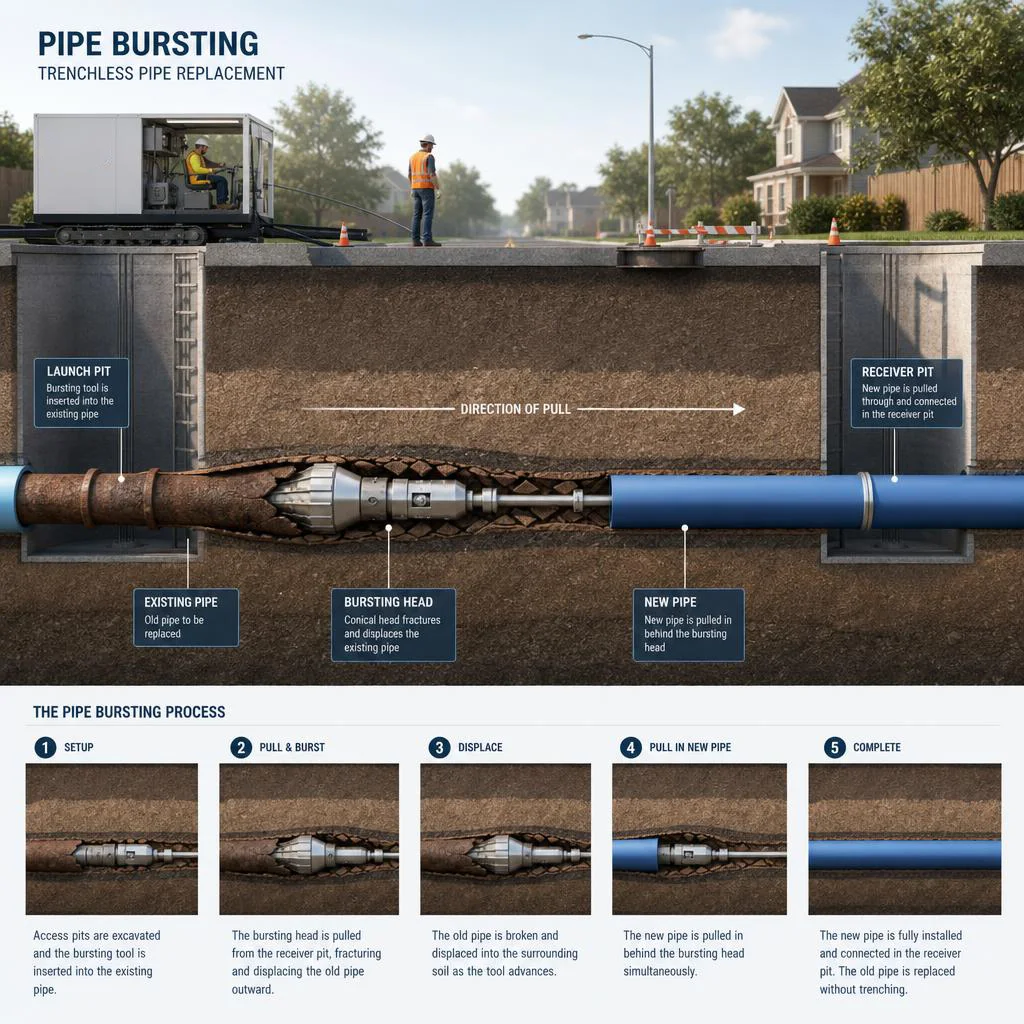
Pipe Bursting replaces an existing underground pipe by breaking the old pipe outward and drawing a new pipe into the same route.
What Is Pipe Bursting?
Pipe Bursting is a trenchless renewal method for replacing existing pipes. Instead of excavating the full route, the method uses the old pipe line as the path for the replacement.
A bursting head breaks or splits the existing pipe outward while pulling the new pipe into position behind it.
How It Works
Access pits are used at suitable points along the route. The bursting equipment is set up, the new pipe is prepared, and the bursting head is pulled through the existing line.
The existing pipe material, route condition, service connections and available access all affect whether Pipe Bursting is suitable.
When It Is Used
Pipe Bursting is used where an existing pipe is damaged, undersized or ready for replacement and the route can be reused.
It is often useful for drainage, sewer, water or utility pipe replacement where reducing surface excavation is important.
Typical Applications
- Existing pipe replacement
- Drainage and sewer renewal
- Water and utility pipe routes
- Upsizing where conditions allow
Site Considerations
- Existing pipe material and condition
- Known connections and bends
- Replacement pipe size
- Access pit positions
- Ground movement and nearby services
Benefits
- Reuses the existing route
- Avoids full-length open trenching
- Can install new HDPE pipework
- Reduces reinstatement where suitable
Related Case Studies
Case Study
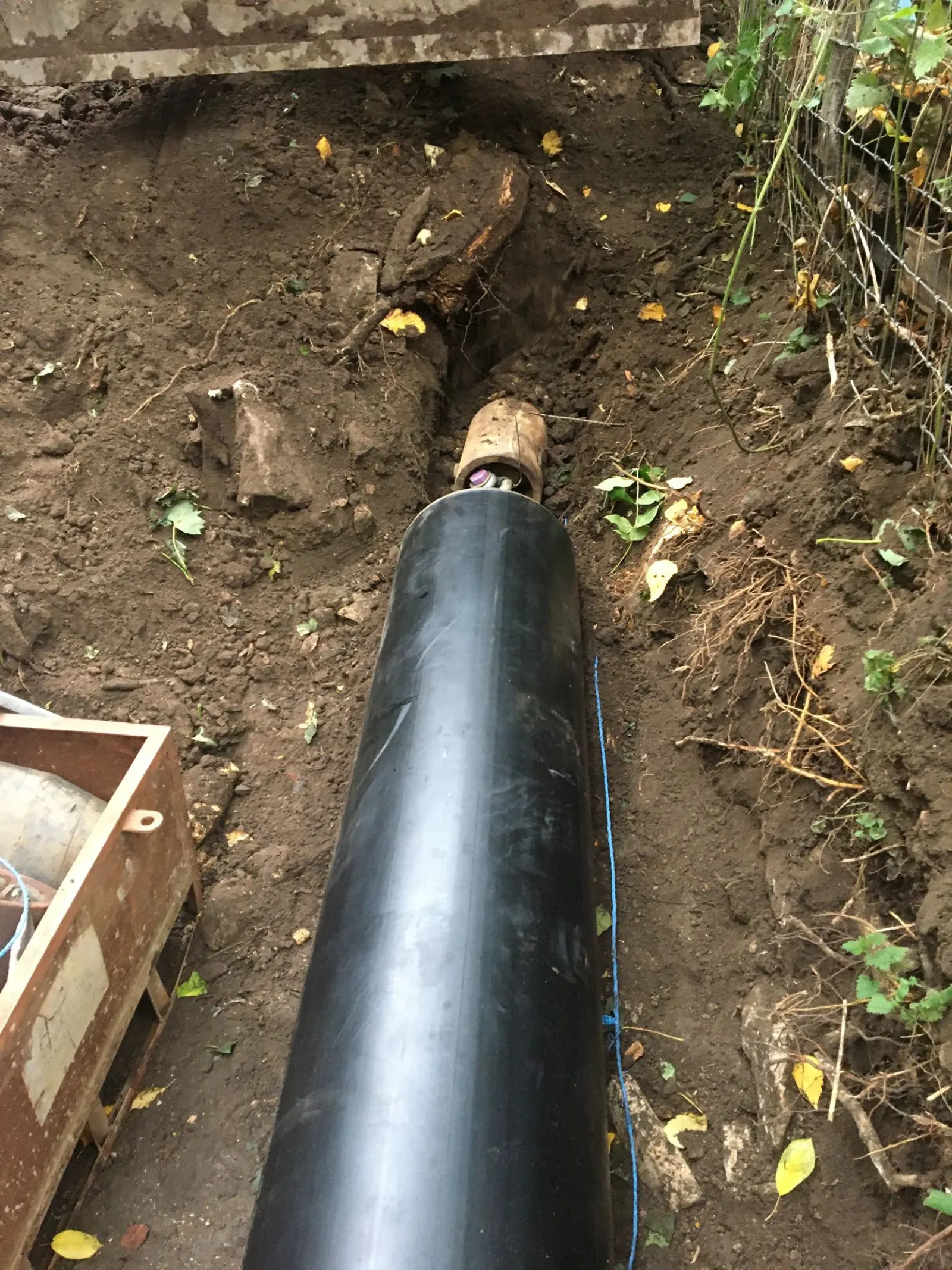
Dunstan Pipe Bursting
120 metres of 355mm OD HDPE SDR11 PE100 pipe bursting at Dunstan, Lincolnshire.
What Information Should You Provide?
Useful enquiry information includes the project location, route length, pipe or duct size, depth, ground details if known, access points, drawings and site photos where available.
The more practical information you can share, the easier it is to identify whether Pipe Bursting or another no-dig method may be suitable.
Planning Pipe Bursting Works?
Send the project location, route length, pipe or duct size, depth, ground details, access points, drawings and site photos where available. No Dig Ltd can help identify whether this method is suitable.