
Steel Casing Installation
Pipe Ramming
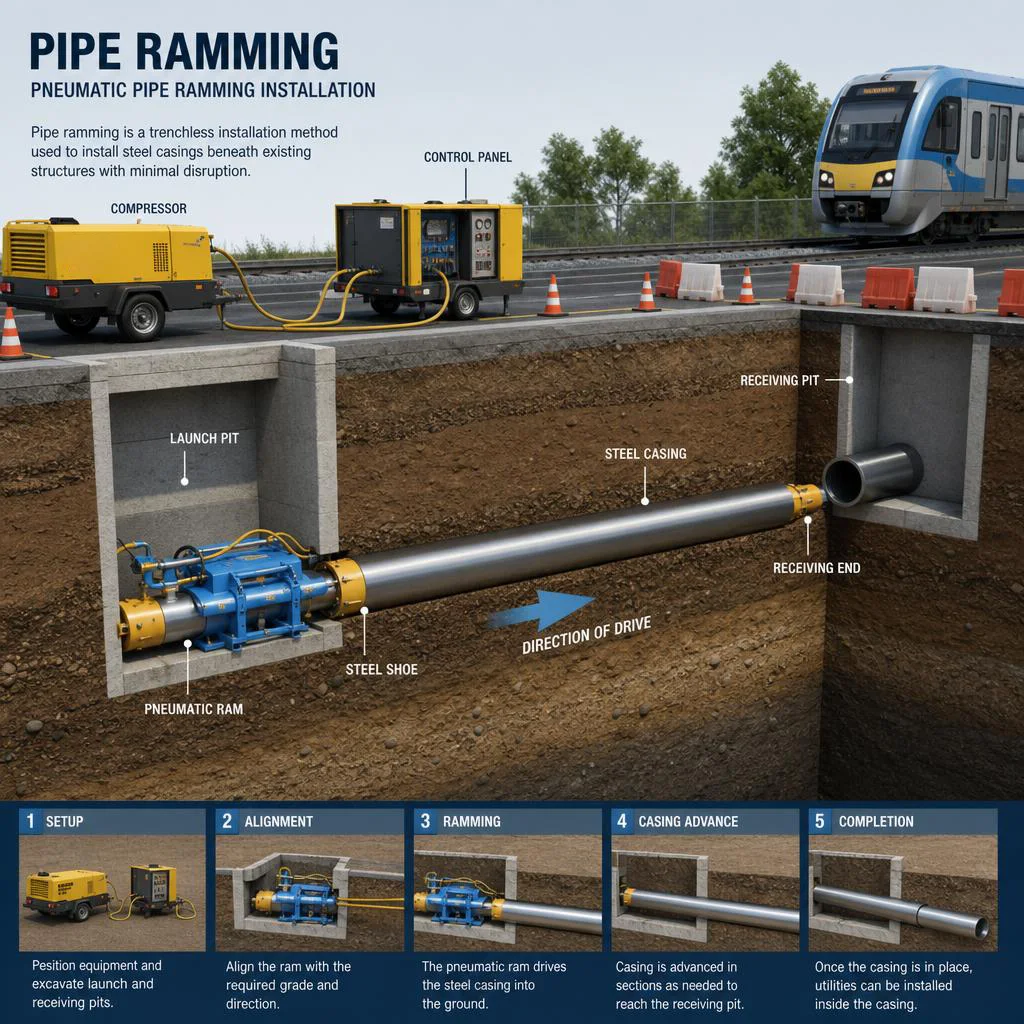
Pipe Ramming uses pneumatic force to drive steel casing through the ground from a launch position, often below roads, rail or structures.
What Is Pipe Ramming?
Pipe Ramming is a trenchless casing installation method. A pneumatic ram applies repeated force to drive steel pipe or casing through the ground.
It is a robust method and is often considered where a steel casing is needed and where the installation can be driven from a prepared launch area.
How It Works
The steel casing is positioned and aligned, then connected to the ramming equipment. The casing is driven through the ground while spoil is managed during or after the drive depending on the setup.
Accurate preparation matters. The launch area, casing alignment and equipment support all affect the quality of the installation.
When It Is Used
Pipe Ramming is often used for crossings and casing routes where open excavation is not practical.
It can be useful under roads, tracks, rail corridors or hardstanding, subject to ground conditions, access and route constraints.
Typical Applications
- Steel casing installation
- Road and rail crossings
- Utility sleeves
- Short to medium trenchless routes
Site Considerations
- Casing diameter and length
- Launch alignment
- Ground type and obstructions
- Receiving arrangements
- Noise, vibration and access constraints
Benefits
- Robust steel casing installation
- Reduces open excavation along the route
- Works from focused access areas
- Useful for crossings and constrained routes
Related Case Studies
Case Study
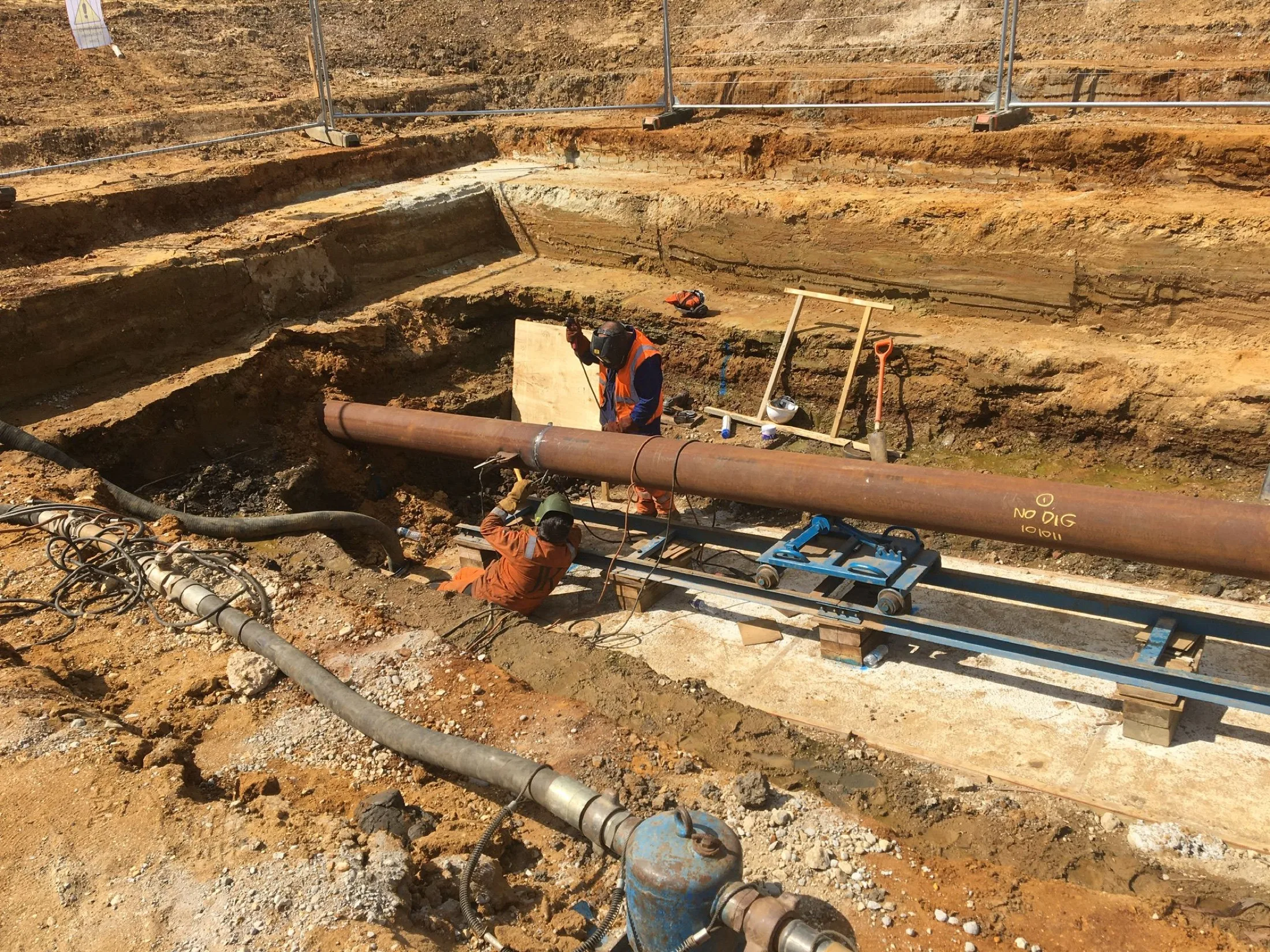
Colchester Pipe Ramming
60 metres of 324mm OD pipe ramming works at Colchester.
Case Study
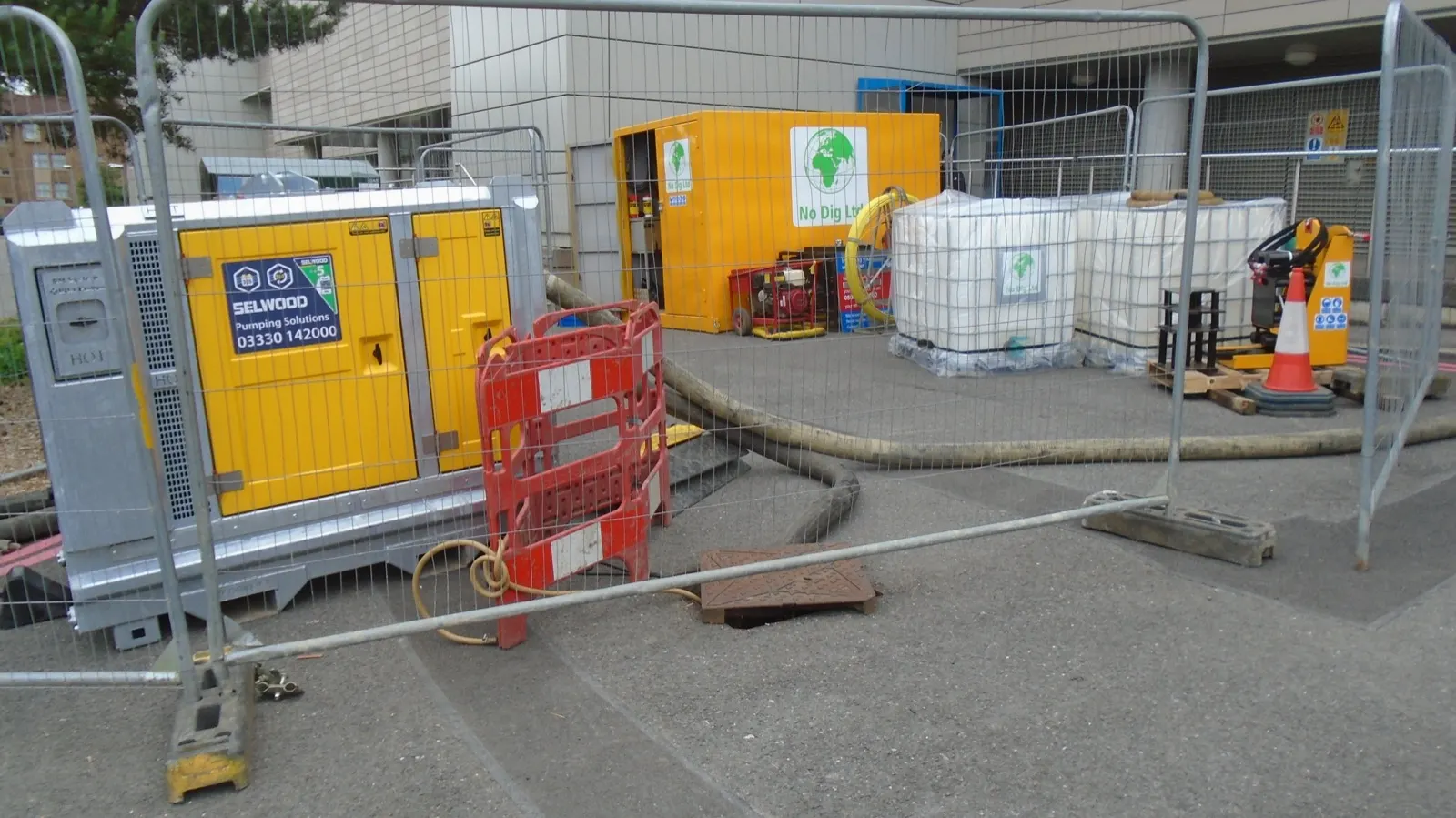
Pipe Ramming And Pipe Jacking
A related project involving pipe ramming and pipe jacking.
What Information Should You Provide?
Useful enquiry information includes the project location, route length, pipe or duct size, depth, ground details if known, access points, drawings and site photos where available.
The more practical information you can share, the easier it is to identify whether Pipe Ramming or another no-dig method may be suitable.
Planning Pipe Ramming Works?
Send the project location, route length, pipe or duct size, depth, ground details, access points, drawings and site photos where available. No Dig Ltd can help identify whether this method is suitable.